
10 Day Lofoten Norway Itinerary


Heads up: some of the links in this post are affiliate links. If you book or buy through one of them, I may earn a small commission at no extra cost to you. I only recommend gear, rentals and stays I have actually used and would send a friend to. Everything in this guide is based on my own trip, and the commissions do not change what I write.
I have been lucky enough to spend the last few years
travelling for work, and I have stood in front of some of the most beautiful landscapes on nearly every continent. Nothing has come close to Lofoten.
British Columbia is home, so I am biased there. But outside my own backyard, Lofoten is the most beautiful and genuinely unusual place I have been. The landscape does not look like it should exist. The people are some of the kindest I have met anywhere, and it is an absurdly safe country. I left my wallet on a table in Norway with five hundred euros cash in it, realized an hour later, and walked back to find it sitting exactly where I left it with every bill still inside.
There are places that photograph well and places that actually feel like something when you stand in them. Lofoten is both, which is rare. It is an archipelago sitting well above the Arctic Circle in northern Norway, where 1,000 metre granite walls drop straight into turquoise water and red fishing cabins cling to the rock like they were bolted there a hundred years ago. Because they were.
I have shot in a lot of mountain ranges. Lofoten still messes with my head. The scale is wrong in the best way. You will drive around a corner and find a beach that looks Caribbean, except the water is 8 degrees and there is snow on the ridge above it.
This is a full 10 day Lofoten itinerary. Flights, ferries, rental cars, campervans, where to base yourself, and what to do each day. Everything below is built for someone who wants to actually get out and move, not just pull over at the viewpoints.
I also filmed two videos while I was there. If you want the visual version of everything in this guide, and the full story of the trip, start with these:
Getting to Lofoten
There is no easy direct route unless you are already in Norway. Almost everything routes through Oslo. Here are a few ways to get to Lofoten, and how each one fits into a 10 day Lofoten itinerary.

Option 1: Fly all the way in (fastest)
Fly to Oslo (OSL), connect to Bodø (BOO), then take a short Widerøe hop to Leknes (LKN) or Svolvær (SVJ). Oslo to Bodø is about 90 minutes. Bodø across the Vestfjord to Lofoten is under 30 minutes and it is one of the better short flights on earth if you get a clear day.
Leknes is the more central airport. Svolvær puts you at the eastern end. Both are tiny, both have limited capacity, and both get expensive if you book late. Reserve early.
Option 2: Fly to Harstad/Narvik Evenes (EVE) and drive in
This is my pick, and it is what I would do again. Evenes is on the mainland, roughly 170 km northeast of Svolvær, so you are looking at a three to three and a half hour drive into the islands. Evenes has grown a lot as a gateway and now takes seasonal direct flights from several European hubs including Paris, Zürich, Frankfurt and Vienna, mostly running May through September.
The trade: a cheaper flight, better rental car and campervan inventory, and the drive in on the E10 across the Lofast connection is genuinely part of the trip. You cross bridges over open water with mountains stacking up on both sides. Do not treat it as transit. Budget half a day and stop.
Option 3: Fly to Bodø, take the car ferry to Moskenes ( This is what I did )
Fly Oslo to Bodø and take the Torghatten Nord car ferry across the Vestfjorden to Moskenes. The direct crossing runs about 3 hours 15 to 3 hours 30. Some sailings stop at the outer islands of Værøy and Røst and stretch to roughly 7 hours, so read the schedule carefully before you book.
2026 fares run around 605 NOK for a car under 6 metres, about 424 NOK for an electric vehicle, and 177 NOK for a motorcycle. Foot passengers and bicycles ride free. Book at torghatten.no, not the old torghatten-nord.no site.
The catch: in summer, car spots sell out days ahead. Only part of the capacity is reservable, and the rest is first come first served in the queue at the dock. If you are showing up with a van in July, book the moment your dates are locked and get to the terminal at least 45 minutes early.
The upside is that this drops you directly into Moskenes, which is exactly where you want to be for the western end of the archipelago. If you are staying at the Airbnb below, this is the most efficient arrival of all.

Option 4: The long road trip
Fly to Tromsø and drive south. It is roughly six and a half hours to Svolvær and it is a spectacular drive through Senja country. Only do this if you have more than 10 days or you are willing to trade hiking time for windshield time.
My recommendation for a 10 day trip: fly into Evenes, drive the E10 west, work your way toward Reine, and ferry out from Moskenes to Bodø on the last day. You see the entire archipelago once, in one direction, with no backtracking.
Where to rent a Car.
You need a vehicle. Public transport exists but it is thin, the buses do not go where the good stuff is, and half of what makes Lofoten worth the flight is being able to pull over at a random spot. You will be going this a lot haha.


Where to pick up
Out Lofoten Van Rental (what we chose)
On my trip I wanted to have the option to skip out on renting a home for the night and stay in the van at the trailhead. A camper is a bit more expensive but worth every penny. This was also an electric van, so we did save money on gas. If you are planning on heading north to Tromsø I do recommend getting a gas van due to the lack of chargers the further north you go. This unfortunately turned one leg of our trip from a 6 hour trip into an 11 hour drive with charging.
One thing to be aware of before you plan on sleeping at trailheads. Lofoten has tightened up on overnight parking, and campervans and motorhomes are only permitted to stay overnight at approved campsites or designated overnight areas. Out Lofoten hands every guest the list of approved spots at pick-up, which is what we used. Plenty of them sit close enough to the trailheads that you still get your early start, you are just doing it legally and with a toilet nearby.
Evenes (EVE) has the best inventory and the best rates. Bigger fleet, more competition, fewer surprises.
Leknes (LKN) has rental desks right in the arrivals hall and is the most central pickup point on the islands. Shorter drives to almost everything.
Svolvær (SVJ) has no rental desks at the airport itself. Avis and Sixt will shuttle you to off-airport offices, but confirm that before you land.
Moskenes ferry terminal works if you are coming across from Bodø. Limited stock and short opening hours, so book ahead and confirm your arrival time.
Local companies worth comparing
The aggregators mostly surface the big international names. Local operators are often cheaper and more flexible:
Lofoten Car Hire (Leknes, Moskenes ferry terminal, Evenes)
Rentacar Lofoten (Svolvær, Leknes, Stamsund, Moskenes)
Lofoten Rental Car (Svolvær)
One warning. "Rent a Car Moskenes" has shut down its rental business and sold vehicles to Lofoten Car Hire. There is a Facebook page still using the old name that is a scam. Do not send money through it.

Stuff nobody tells you.
Tolls and ferries run on AutoPASS. Every rental car comes with a chip already fitted. You do not pay at the booth or at the ferry ramp. Everything gets billed to the rental company and passed on to you when you return the car. There are very few tolls inside Lofoten itself, but you will hit them on the mainland approach.
Book long, not short. Weekly rates are usually meaningfully cheaper per day than a three day rental.
One way rentals are expensive. Dropping in a different city can run several thousand NOK. If you are ferrying out from Moskenes to Bodø, check whether your company allows a Bodø drop and what it costs before you build the whole itinerary around it.
Winter tires are not optional. If you are going October through April, confirm studded tires in writing. The E10 is well maintained but the side roads to trailheads are not.
Under 25 means a young driver surcharge, and some companies restrict vehicle classes entirely.
Blood alcohol limit is 0.02 percent. Effectively zero. Take it seriously.
Roads are narrow. Single lane bridges, blind corners, tunnels, and a lot of tourists stopping in stupid places to take photos. Do not be one of them. Use the marked pullouts.

Renting a Campervan in Lofoten Instead
If you are shooting, chasing light, or you just want to wake up somewhere different every morning, a campervan is the better tool. Lofoten is compact enough that you are never more than a couple hours from anywhere, and the freedom to reposition for sunrise is worth a lot.
Van rental companies
Wecamp is the largest operator up north. Fleet of around 50 custom Mercedes Sprinters and VW Crafters. Pickup at Evenes (a two minute walk from the terminal), plus Leknes in Lofoten, Fauske and Tromsø. Unlimited kilometres, insurance, AutoPASS, a full kitchen, bedding, a BBQ grill, camping furniture and a portable toilet are all included. They do not hold a security deposit, which is unusual and welcome. You need to be 21 with a standard licence.
Lofoten Vanlife is based in Svolvær and runs about 20 restored VW T3s originally built in the 1980s. Smaller, more characterful, more of a commitment if you are tall.
Lofoten VW Camper operates out of Henningsvær with a small fleet of VW T5 Californias and a T4 Westfalia. Tiny operation, very personal.
Arctic Vanlife runs out of Evenes and Harstad, right by the airport.
Bodø & Lofoten Campervans is a good fit if you are ferrying across, with premium vans starting around €194 per night, winterized with proper heaters and studded tires.
Arctic Campers is Tromsø and Oslo based, from roughly 2,183 NOK per day, if you are doing the longer northern road trip.

Van versus car, honestly
A van costs more per day than a car plus an Airbnb in shoulder season. Where it wins is flexibility and the ability to be at a trailhead at 4am without having driven an hour. Where it loses is comfort in bad weather, and Lofoten has a lot of bad weather. Ten days in a van in horizontal October rain is a different trip than ten days in a van in June midnight sun.
What I would actually do: split it. Van for the first stretch while you are moving through the archipelago, then a fixed base for the back half when you are hiking the same corner repeatedly. Which brings me to where to stay.
Wild camping rules
Norway has allemannsretten, the right to roam. You can pitch a tent on uncultivated land for up to two nights, at least 150 metres from the nearest house or cabin. That right covers tents. It does not automatically cover parking a campervan wherever you like. Lofoten has been overrun in peak season and a lot of pullouts now have explicit no overnight parking signage. Use the designated campsites, pay the fee, use the facilities, and do not be the reason the next round of restrictions happens.

Where to Base Yourself: Reine
The village of Reine sits on Moskenesøya at the western end of the archipelago and it is the single best base in Lofoten. Reinebringen, Å, Hamnøy, Sakrisøy, Kvalvika, Bunes and the Moskenes ferry are all within a short drive or a short boat ride.
For the back half of this 10 day Lofoten itinerary I would put you here, this is where I stayed when I was in Lofoten.


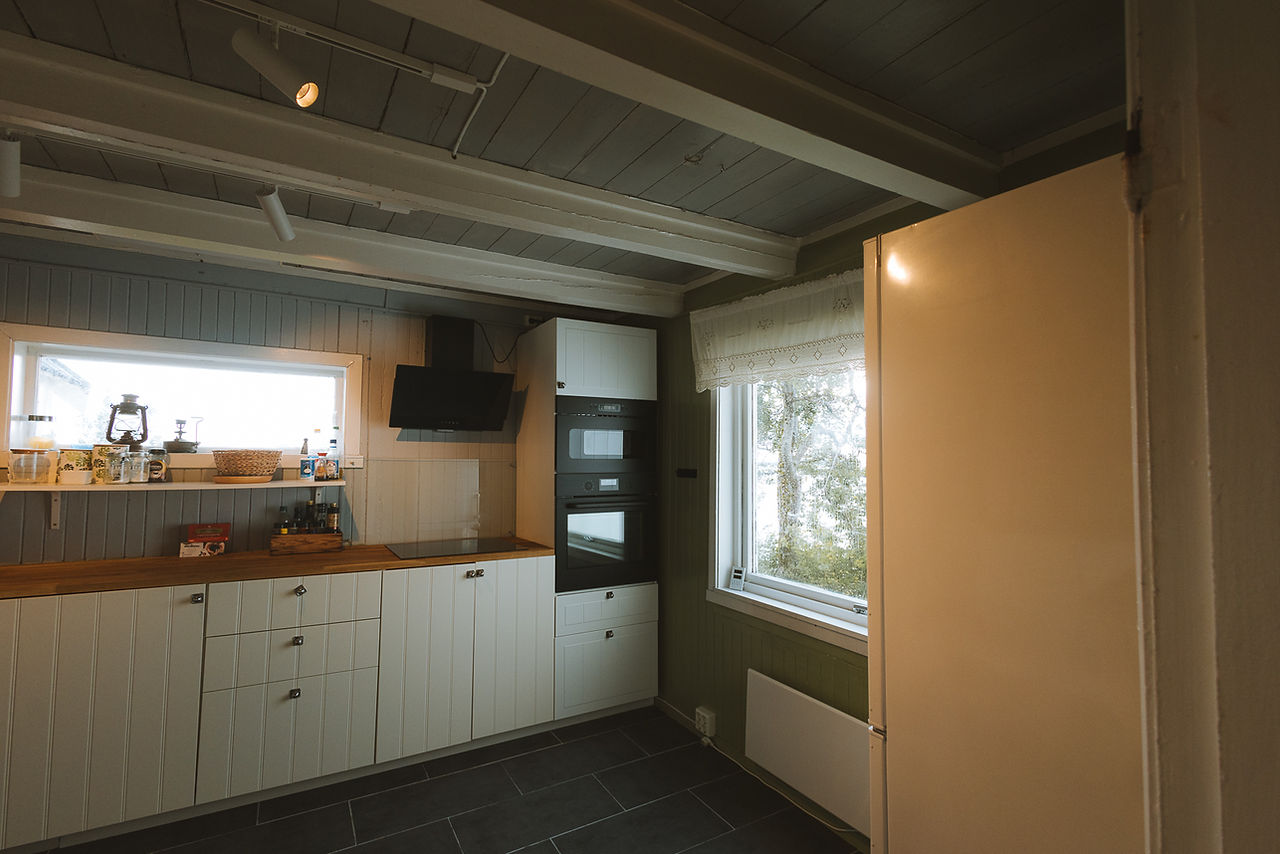

It is a historic fisherman's house, once the home of Reine's oldest fisherman, sitting on a hilltop above the village with mountain and ocean views in both directions. Five bedrooms, 10 beds, 2.5 baths, sleeps 10. Entire home, so you are not sharing with anyone. It is a guest favourite at 4.82 stars across 22 reviews, hosted by Out Lofoten, a Superhost with eight years of hosting and a 100 percent response rate.
Why it works for this kind of trip:
Self check-in via lockbox. You will be arriving late and leaving before dawn. Nobody has to wait up for you.
Private parking above the house. Parking in Lofoten villages is a genuine problem in summer. Having your own spot is worth more than it sounds.
Supermarket one minute away. Norway is expensive and eating out constantly will wreck your budget. Cook.
It sleeps 10. If you are travelling with a crew or a family, splitting this across a group makes the per-person cost very reasonable, and you get a full kitchen and a living room instead of six separate hotel rooms.
The location. Reinebringen trailhead is minutes away. If the light looks good you are out the door.
The hosts share their own local guides with guests and will help book activities, which is genuinely useful for things like the Vindstad ferry and fjord trips.
The 10 Day Itinerary
This runs east to west, which means you finish in the most dramatic part of the archipelago instead of starting there.
Day 1: Arrive Evenes, drive the E10 into Lofoten
Land at Evenes, pick up the vehicle, and drive west. Roughly three hours to Svolvær if you drive straight through, which you will not. The Lofast crossing is spectacular. Stop at the pullouts, get your first look at the walls coming out of the water, and get to Svolvær or Kabelvåg for the night. Do not schedule anything else. Travel days are travel days.
Day 2: Svolvær, Henningsvær and Festvågtind
Start in Svolvær. Hike Festvågtind for the view back over the town and the Vestfjord. It is short but steep, about two hours return, and it gives you the whole geography of eastern Lofoten in one look. If you have the legs, add Djevelporten, the boulder wedged between two rock faces just above town.
Afternoon in Henningsvær, the fishing village built across a scatter of small islands. Yes, the football pitch surrounded by drying racks is the shot everyone wants. Get it, then walk the harbour and go find something better.
Day 3: Trollfjord and the sea
Take a boat into Trollfjord. It is a two kilometre gash between vertical walls that narrows to about 100 metres at the mouth, and the sea eagle population here is dense. RIB trips run from Svolvær and are cold, fast and worth it. Slower sightseeing boats exist if you want to actually hold a camera steady.
Afternoon in Kabelvåg, the older and quieter of the two towns. Lofotkatedralen, the wooden church, is worth a stop.
Day 4: West to Gimsøya, Eggum and Unstad
Start moving west on the E10. Detour onto Gimsøya. Stop at Eggum, on the exposed northern coast, where the road ends at an old radar station and the swell comes in hard off the open Atlantic.
Then Unstad. This is the Arctic surf village, and yes, people surf here year round in six millimetre suits. Even if you are not getting in, the bay is worth an hour and the coastal trail from Unstad to Eggum is one of the better easy walks in Lofoten.
Overnight around Leknes or Ballstad.
Day 5: Haukland, Uttakleiv and Offersøykammen
Two of the best beaches in Norway sit back to back here. Haukland is the wide white sand crescent. Uttakleiv is over the ridge, rockier, and the classic sunset and aurora spot. Walk the path over Mannen between them.
Afternoon: hike Offersøykammen. It is short, about 90 minutes return, and the summit view over the beaches and the fjord system is disproportionate to the effort.
Day 6: Nusfjord, then move to Reine
Nusfjord is one of the oldest preserved fishing villages in Norway and it feels frozen in about 1900. There is an entry fee in season. Go early before the tour buses.
Then drive the last stretch west, over the bridges through Hamnøy and Sakrisøy, and check into the house above Reine. Drop your bags, walk the village, and get a sense of the terrain you will be climbing tomorrow. If the weather is clear, shoot Hamnøy bridge at golden hour. It is the most photographed view in Lofoten for a reason.

Day 7: Reinebringen and Å
Reinebringen is the one. It is a 448 metre climb up a Sherpa built stone staircase of roughly 1,500 steps, and the view down over Reine, the fjord and the surrounding peaks is the single best payoff to effort ratio in the archipelago. It takes most people 45 to 90 minutes up. Go early, wear real footwear, and be aware that the stairs are slick when wet and the route is closed in avalanche conditions in winter.
Afternoon: drive to Å, the village at the literal end of the E10. Stockfish museum, the old bakery, and the road just stops. Sørvågen on the way back.
Day 8: Kvalvika Beach and Ryten
Drive to Fredvang and hike into Kvalvika, a beach you cannot reach by road, tucked between two headlands. About an hour each way over a saddle. Then climb Ryten above it, which puts you on a cliff edge 543 metres directly over the sand. This is the classic Lofoten hiking day and it takes most of it. Five to six hours with stops.
Pack food and water. There is nothing out there.
Day 9: Bunes Beach via the Vindstad ferry
Take the small passenger ferry from Reine into Reinefjorden to Vindstad, then walk about 45 minutes over to Bunes Beach, a huge sand bowl backed by the 700 metre Helvetestinden wall. In summer this is a midnight sun spot. The ferry runs on a limited schedule, so check times the day before and build your day around the return sailing. Missing it is a long, cold problem.
If the fjord is calm, kayaking Reinefjorden is the alternative and it is arguably a better way to see the walls.

Day 10: Ferry out from Moskenes
The Moskenes terminal is minutes from the house. Take the direct crossing to Bodø, about three and a half hours across the Vestfjorden, and fly out from there. Get on deck as you leave. Watching the whole range shrink behind you is the right way to end this.
If you are returning your vehicle at Evenes instead, budget a full five hours of driving and leave early.
The Best Time to Visit Lofoten
June to early August: midnight sun. The sun does not set, which means you can hike at 1am in full daylight. It is also peak season, which means booked out ferries, full campsites and busy trailheads. Warmest and most reliable weather, which in Lofoten still means high single digits to mid teens Celsius and a real chance of rain.
Late August to September: my favourite. Nights come back, so aurora becomes possible again, the crowds thin, prices drop, and the light gets long and low. Weather gets less reliable.
October to March: aurora season, dramatic light, very short days, and real winter driving. Fewer people, harder logistics, and some hikes including Reinebringen are effectively off limits. Incredible if you know what you are doing.
April and May: shoulder. Snow still on the peaks, green coming back, very few people.
Practical Tips for Travelling in Lofoten
Money. Norway is expensive and Lofoten is expensive within Norway. Cards work everywhere including the smallest kiosk. You will not need cash.
Food. Groceries at Coop or Rema 1000 will save you a fortune. That supermarket a minute from the Airbnb is a real budget lever. Eating out will run you 300 to 500 NOK a plate.
Weather. It changes hourly. Bring genuine rain shell and layers regardless of season, and check yr.no, which is the Norwegian forecast everyone actually uses.
Fuel. Stations thin out at the western end. Fill up in Leknes rather than assuming you will find something past Ramberg.
Drones. Norway follows EU drone regulation. Register, carry your operator ID, and respect the no fly zones around the airports at Leknes and Svolvær. Nusfjord and some private village areas have their own restrictions.
Leave no trace. Lofoten has taken a beating from tourism growth. There are toilet facilities at most major trailheads now for a reason. Use them.
Your 10 Day Lofoten Itinerary in Short
Fly into Evenes, drive the E10 west, work through Svolvær and Henningsvær, cross the middle at Haukland and Nusfjord, then base yourself above Reine for the back half and hike Reinebringen, Kvalvika, Ryten and Bunes. Ferry out from Moskenes to Bodø. Rent a car if you want comfort, rent a van if you want to chase light, and book everything earlier than you think you need to.
Ten days is enough to see it properly. It is not enough to be done with it.


